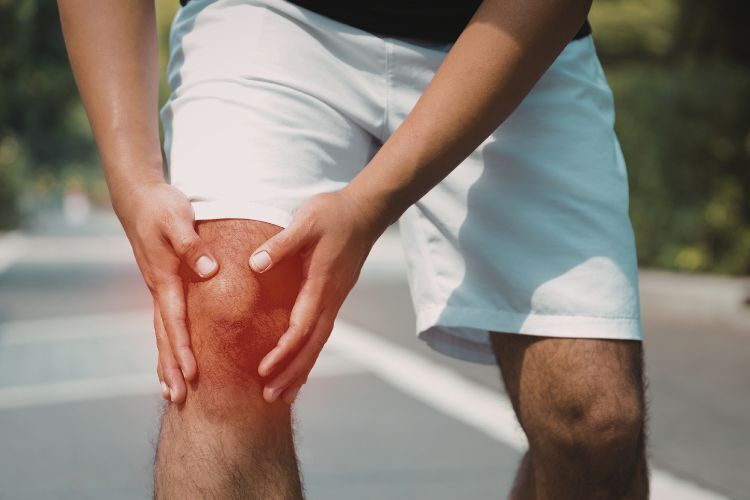
You lace up your shoes, head out the door, and somewhere around kilometre three it starts, a dull, nagging ache right around the front of your knee. It might ease off while you're moving, only to flare up the moment you stop. If this sounds familiar, you're likely dealing with runner's knee, one of the most common overuse injuries among runners and active people. The good news is that with the right care, most people recover fully and get back to running without restrictions.
At Good to Go Sports Therapy in Victoria, BC, we help runners and athletes understand what's driving their pain and build a clear path back to full activity.
What Is Runner's Knee?
Runner's knee is the common name for patellofemoral pain syndrome (PFPS), a condition that causes pain around or behind the kneecap. It develops when the patella doesn't track smoothly over the femur during movement, creating friction and irritation in the surrounding tissue and cartilage over time.
Despite the name, you don't have to be a runner to develop it. Cyclists, hikers, and people who spend long hours on their feet are also susceptible. That said, runners are particularly prone because of the high volume of repetitive knee loading involved in the sport.
Common signs include a dull ache at the front of the knee, pain that worsens going up or down stairs, stiffness after sitting for long periods with the knee bent, and occasionally a grinding or clicking sensation during movement. If these symptoms sound familiar, getting assessed early makes runner's knee recovery significantly more straightforward.
What Causes It?
Runner's knee rarely has a single cause. It typically develops when several contributing factors combine to overload the knee joint. The most common include:
- Weak hip and glute muscles that allow the knee to collapse inward during the loading phase of running
- Tight quadriceps or IT band that pull the kneecap off its natural tracking path
- Overpronation (excessive inward rolling of the foot) that shifts stress upward through the ankle and into the knee
- Training load errors such as ramping up mileage too quickly, adding hill work, or changing running surfaces abruptly
- Inefficient running mechanics, particularly overstriding or landing with a stiff leg
This is exactly why targeted runner's knee exercise and strengthening work are so effective. Treating the muscular and biomechanical factors that put stress on the knee is often more impactful than focusing on the knee itself.
How Long Does Runner's Knee Recovery Take?
Runner's knee recovery time depends on how long the issue has been building, the severity of the irritation, and how consistently someone follows their rehab plan.
For mild cases caught early, meaningful improvement often comes within 4 to 6 weeks. More established cases, where compensatory movement patterns have developed, can take 3 months or longer to fully resolve. The difference almost always comes down to whether the root cause is being addressed or just the symptoms.
Pushing through significant pain tends to drag out recovery. But complete rest isn't always the right answer either. A sports chiropractor can help you find the right level of modified activity that allows healing while keeping you as active as possible through the process.
How Chiropractic Care Helps Runner's Knee
Chiropractic care for knee pain takes a whole-body approach rather than focusing solely on the painful joint. At Good to Go Sports Therapy, our assessment examines how the entire lower kinetic chain is functioning, including the foot, ankle, knee, hip, and lumbar spine, because dysfunction anywhere in that chain can show up as knee pain.
Here is how chiropractic care fits into runner's knee treatment:
Joint manipulation and mobilization restores proper movement in the knee, hip, and foot joints that may be contributing to abnormal patellar tracking. When joints elsewhere in the chain are restricted, the knee is often forced to compensate, and addressing those restrictions reduces the load on the kneecap directly.
Soft tissue therapy works on the muscles and fascia that are pulling the patella off track, particularly the IT band, quadriceps, and hip flexors. Techniques like Active Release Therapy and instrument-assisted soft tissue mobilization are highly effective for these kinds of stubborn tissue restrictions.
Targeted rehabilitation exercises address the specific muscle weaknesses found during your assessment. Hip abductor and external rotator strengthening consistently ranks among the most effective runner's knee exercises for long-term resolution, because these muscles directly control how the knee tracks during the stance phase of running.
Gait and movement analysis identifies the biomechanical habits that contributed to the injury. Small adjustments to running form, such as increasing cadence slightly or improving hip extension, can meaningfully reduce patellar stress on every single stride. This is one area where sports therapy in Victoria provides real long-term value beyond just managing the acute pain.
Runner's Knee Stretches That Help
Stretching supports recovery but works best as one piece of a broader treatment plan. The runner's knee stretches most commonly recommended include:
- Quadriceps stretch to reduce tension pulling on the patellar tendon
- Hip flexor stretch to address anterior pelvic tilt that increases knee loading
- Calf and Achilles stretch to improve ankle dorsiflexion, which has a direct effect on knee mechanics
- IT band work to reduce lateral pull on the kneecap
If you're trying to figure out how to fix runner's knee at home, combining these stretches with hip and glute strengthening is a solid starting point. That said, if symptoms persist beyond two weeks, a proper assessment is worth it to make sure you're targeting the right structures.
Other Conditions That Can Complicate Knee Pain
Sometimes what feels like straightforward runner's knee has other factors contributing to it. Hip dysfunction, for example, is a very common driver of knee pain that often goes unaddressed. Lower back issues can also refer pain or alter movement patterns in ways that load the knee abnormally. If you're dealing with overlapping pain in the hip or lower back alongside your knee symptoms, our team can assess the full picture.
We also work with patients managing a range of common conditions that affect active people, from tendonitis and IT band syndrome to sciatica and repetitive stress injuries. If you're unsure whether chiropractic care is the right fit, a registered massage therapist in Victoria can also play a meaningful role in your recovery, particularly for soft tissue management alongside your chiropractic treatment plan.
Getting Back to Running
The goal isn't just pain relief. It's returning to full training with confidence, knowing the problem has been properly addressed rather than just masked. A good return-to-run plan is graduated and built around your specific recovery markers, not just a generic timeline. Most runners are back to full training within 2 to 3 months with consistent care and good follow-through on their rehab program.
If runner's knee has been keeping you off the trails or the track, the team at Good to Go Sports Therapy is here to help. Book your assessment today and take the first step toward running without limits.

.jpg)
.jpg)
